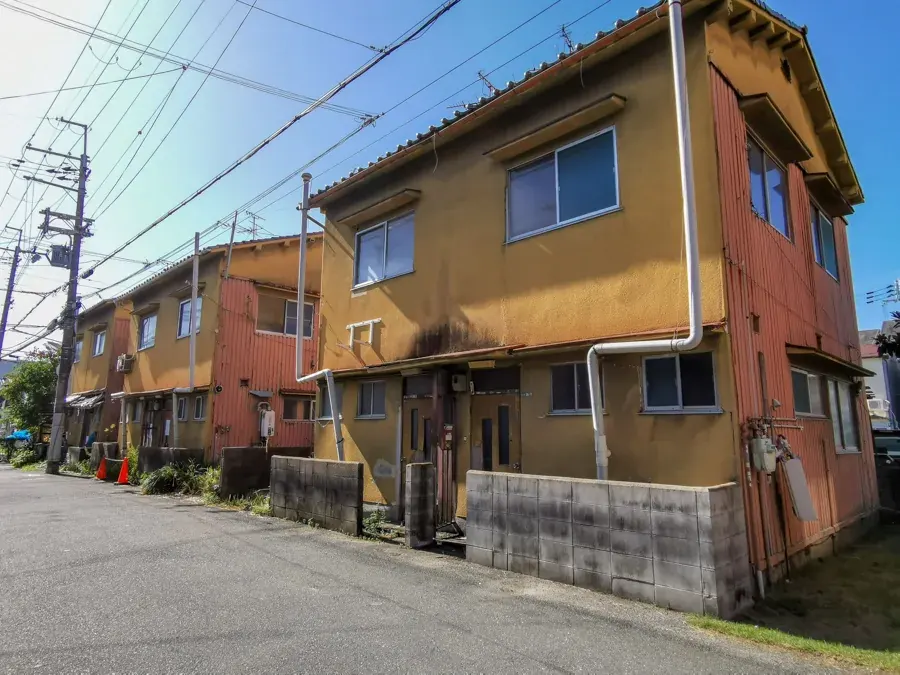
Turning the site of a vacant house into a farm
In 2019, a new farm project got underway in Neyagawa. It involved demolishing a 60-year-old wooden row house that had stood empty for several decades, and turning the site into a farm for the community. The building's exterior was quite run-down and had become a worry for the neighborhood. The land had originally been farmland, so the condition of the soil was very good.
A "rescue" before demolition
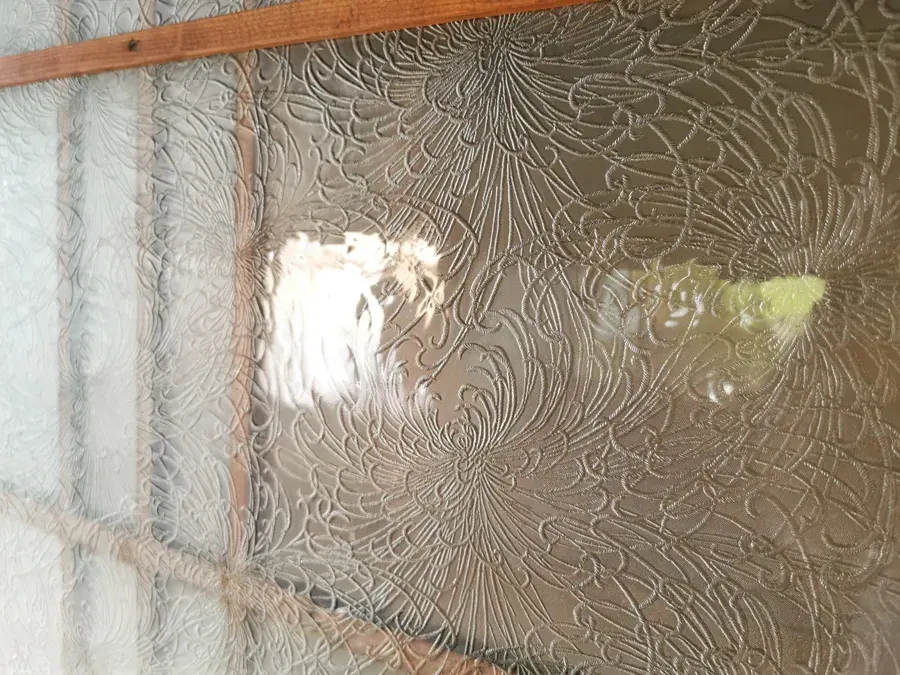
Ahead of the demolition in November 2019, we went through the building and decided to rescue the small items and fittings we could keep. There were four buildings, and one of them was planned to be renovated, including seismic reinforcement, into a kitchen and salon where everyone can gather.
Glass doors with patterned panes are hard to find these days. We wanted to keep them all, but with no place to store them, we reluctantly gave up. If we ever secure a warehouse or a place to sell, I would love to stock fittings like these and put them back into circulation. That was what I was thinking as we said goodbye. Instead, we searched mainly for small items that don't take up room. We found unusual doorknobs from some of the rooms, and a lampshade with a hint of Asia about it. We cleaned them up and decided to use them in the salon and other projects.
Salvaged lumber that becomes fire
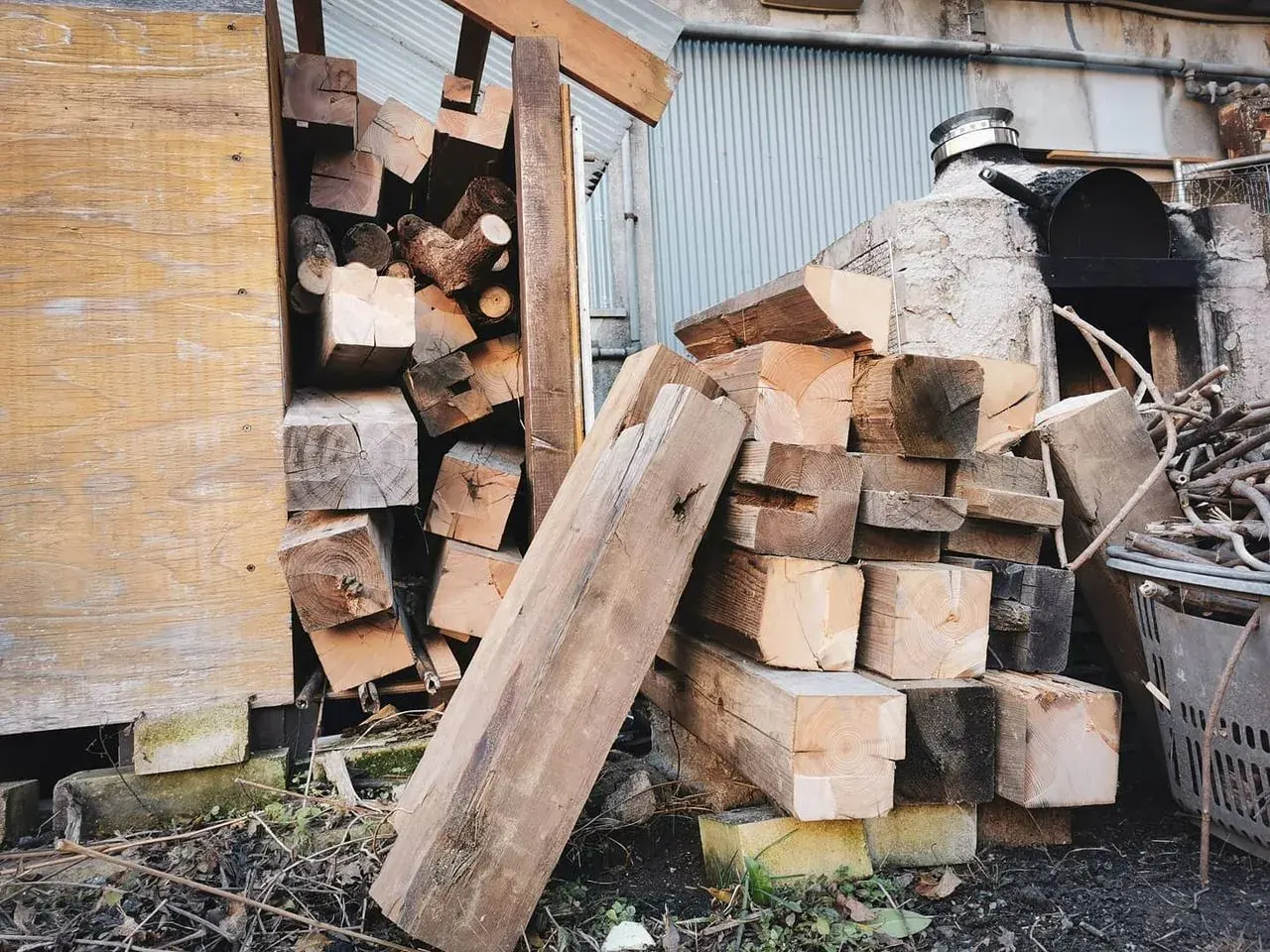
In February 2021, ahead of a marché event, we split a large amount of firewood for stone oven pizza. We used leftover materials from crafts and construction, pillars from the Neyagawa demolition, and fallen park trees we had been given and left to dry.
When a building is torn down, everything normally becomes waste. But with a little effort, small items find a place to be used again, and pillars become firewood that fuels our cooking. Circulating resources within the community can begin without any special equipment. The very process of turning a vacant house site into a farm became a chance to learn about cycles.