The question of where soil comes from
Once you keep a farm going, soil is something you cannot avoid. It is so familiar, yet few of us really know how it is made. So at Minna no Uen Kitakagaya, with a grant from the Osaka Sozo Chishima Foundation, we took part in an art program with the artist unit Yodogawa Technique. Over more than a year, it was a program for learning about and thinking through the cycles of nature and how people are part of them.
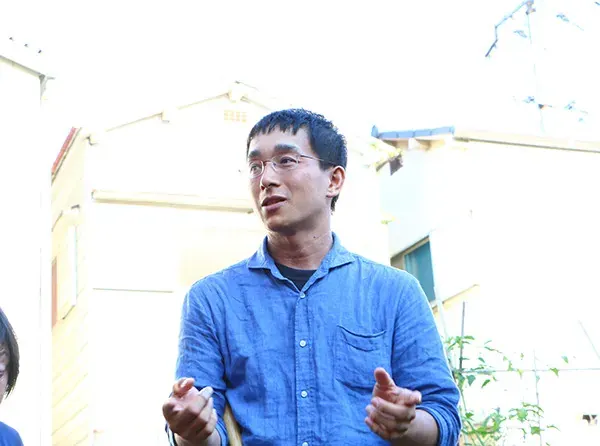
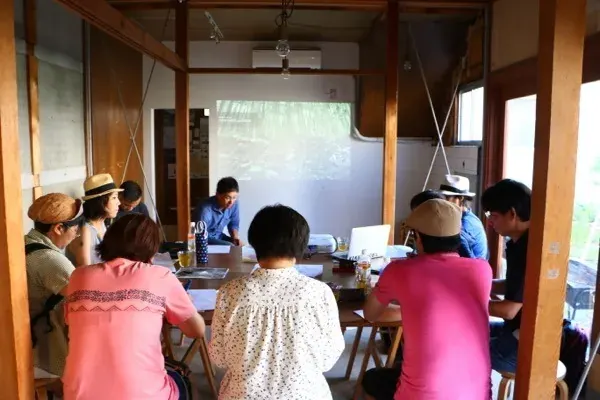
In July 2016, we invited a soil researcher for a study session. We learned that in Japan, dead grass and other materials that become soil are still treated as "garbage," and that carefully managed soil pays off in the long run, even in terms of cost. Afterward, we all checked the pile of dead grass we had simply left in the field: underneath it, small creatures were wriggling around and soil was being made. The cycle of soil turned out to be simpler than we had expected.
Three boxes that work as a compost bin and a toilet
Then in September, the work "Art Compost Ju-ko" was completed. It is made of three stainless steel boxes with no top or bottom. Normally, the three are lined up side by side and used as compost bins; by moving the contents along as the grass and manure break down, you can make soil efficiently. Stack the three on top of each other and fix them in place, and they become a composting toilet big enough for one adult to step inside. It is also designed with disaster situations in mind, as a way to deal with the problem of toilets after a disaster.
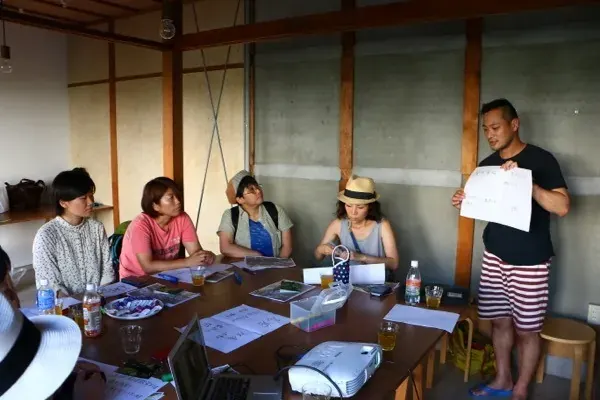
To celebrate its completion, we borrowed a former furniture warehouse in Kitakagaya and showed it for a short time.
Making the cycle visible
By expressing two functions, "compost" and "toilet," in a single form, the work lets us think about the relationship between people and nature from the viewpoint of a cycle. With the help of art, systems we usually overlook take on a visible shape.
After the exhibition, we planned to put the work to use as a real compost bin on the farm. Not just something to look at, but art that works in the field. I believe that conveying the cycle of resources in a way that is enjoyable and tangible is also an important role of an urban farm.