Unseen, but certainly there
Soil full of microbes is said to be good soil. Even if we vaguely believe that, we rarely try to find out which microbes are actually in it. I was no exception.
Still, when you are out in the field, you can certainly feel the presence of microbes. Pile up the weeds you have pulled, and they soon break down and return to the soil. The soil on the farm, too, has become much moister to the touch than when we started. You cannot see them, but they are without doubt at work there. I wanted to find out what they really were.
An age when citizens can read genomes
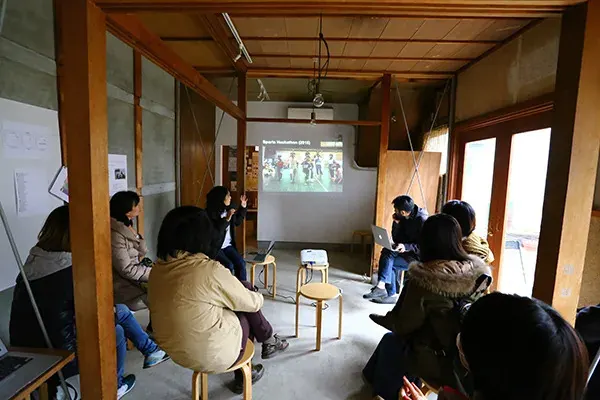
So in autumn 2019, together with the Bio Research team at Yamaguchi Center for Arts and Media (YCAM), we began a survey of soil microbes at the Kitakagaya farm. YCAM Bio Research is a team that connects biotechnology, which is becoming more familiar in daily life, to our lives from the perspectives of art and design.
The technique we used is called "metagenomic analysis." It examines all the microbes contained in a sample and identifies which kinds are present. I was surprised to learn that genetic analysis, which once cost an enormous amount, is now within reach of ordinary citizens. In the first session, after learning the basics of biotechnology, we collected soil from various environments on the farm, such as inside the rice paddy and the spot where we pile up grass.
A change in how we see, more than the results
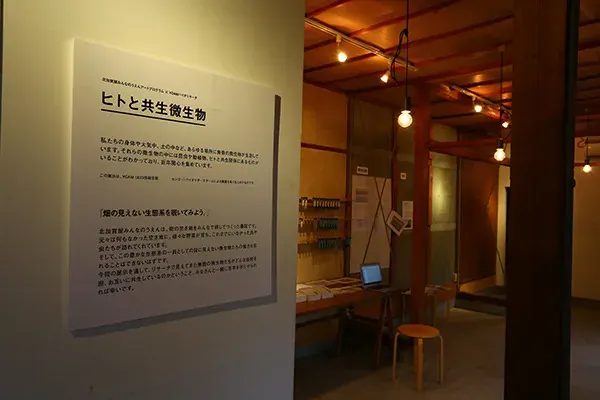
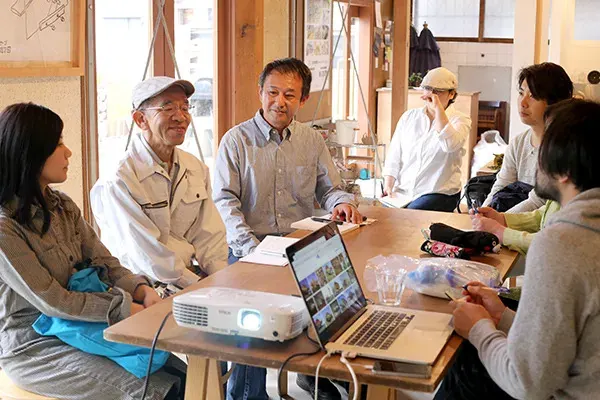
In January 2020, we held a report meeting and an exhibition. We displayed the results of comparing Kitakagaya soil with soil from Yamaguchi and Okayama, the raw analysis data, and the equipment we used. On the farm, members grow vegetables using a variety of farming methods, but we found no major differences in the makeup of the microbes. On the other hand, the soil in the newly added area, the paddy, and Parabolic Farm gave slightly different results, which was very interesting.
Rather than giving a right answer about soil, looking at it through cutting-edge technology made the soil we touch every day look different. That experience was the real harvest. I think even a small urban field can be a place for investigating and learning about the nature around us.