Natto you can make at home
Have you ever made natto yourself? In September 2019, we held a natto-making workshop at Minna no Uen. The instructor is someone who lives a farming-based life in Asuka Village and Sakurai in Nara. The "Minna no Uen Soy Sauce Making" project that began in 2017 also started from this person and farm members saying, "We want to make soy sauce."
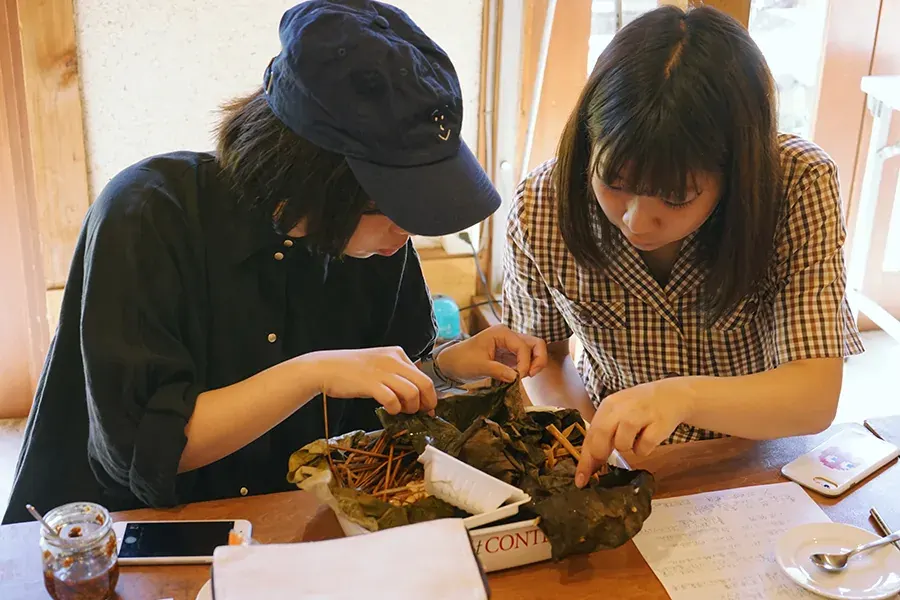
We tend to associate natto with rice straw, but apparently the natto bacterium lives on most plants. That day, the instructor combined lotus leaves he grows and rice straw with a liquid of natto bacteria taken from natto. Steamed soybeans are wrapped in boiled leaves or straw, and kept at the right temperature and humidity in an insulated container of the kind you can find at a 100-yen shop. He said this method works even in winter. I was amazed that it could be that easy.
Staff members of the nonprofit Hello Life joined this session using their workplace's employee benefits program. Apparently their company supports taking part in events and activities for health. It made us glad to know that experiences on the farm can also help people who work look after their health.
Salt drawn from brine
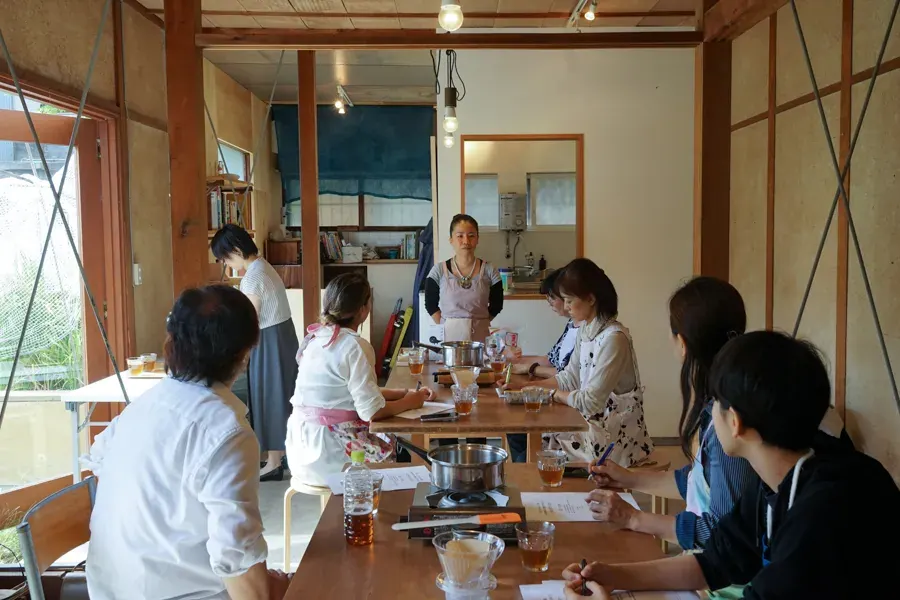
In October, we made salt in a seasoning series by "Plus Amuse," a cooking class unit run by teachers of medicinal cuisine and fermentation. We learned about the role of salt in medicinal cuisine and traditional Chinese medicine and tasted salts from various regions. Then we heated brine (kansui) to evaporate it and took out the salt crystals with a coffee filter. The liquid that collects below is called "nigari." Everyone took home some of the salt in small portions. After that, as a special treat, we fired up the stone oven and baked three kinds of rice-flour pizza.
A place to take the basics of daily life back into our hands
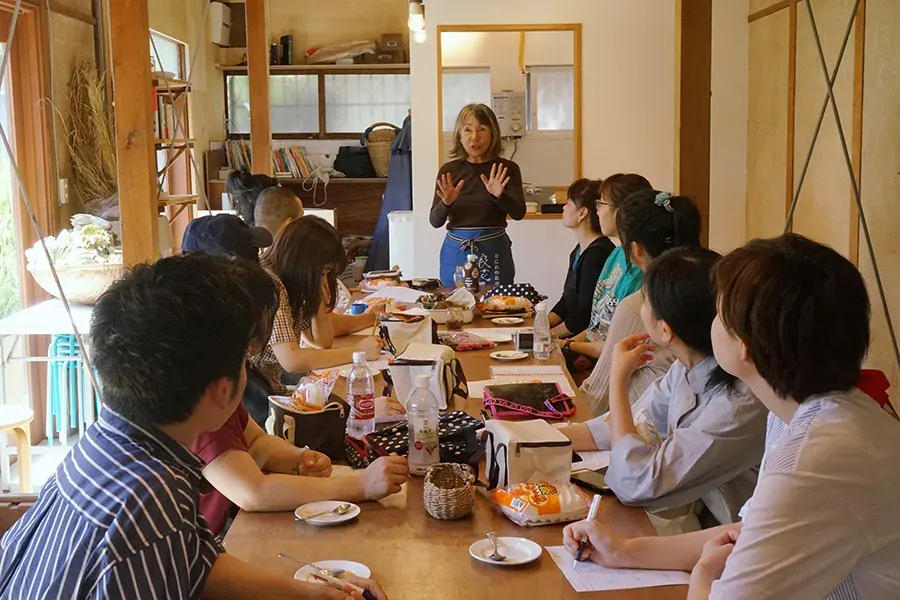
Natto and salt are foods we usually take for granted as things to buy. But when you make them with your own hands, you really understand how they work, how much effort they take, and how much we have to be grateful for.
The wisdom of fermentation and preservation was once passed down in homes and communities. A farm with a field and a kitchen, where people who can teach and people who want to learn come together, can become a place that brings this wisdom back into daily life. That is what I believe.