The "whole process," for the children
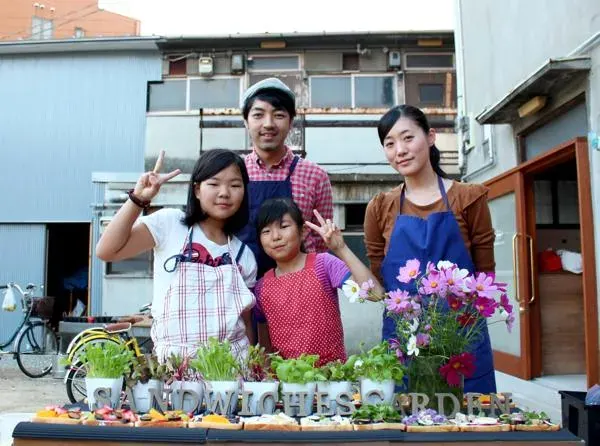
At Minna no Uen Kitakagaya, we have held the "children's cooking class that starts from seed" since the beginning. The two instructors are a teacher who studies children's education and a cooking researcher. It is a class where children grow vegetables in the field and learn the importance of life through the joy and deliciousness of cooking.
The 2013 class was built around three programs: "Garden," growing plants on the farm; "Kitchen," trying out cooking; and "Work," making original tools and signs to create a fun farm. Starting from preparing the field, then growing vegetables from seed, harvesting, cooking and eating together, its feature was that children could experience all of it.
Observing soil and making spices
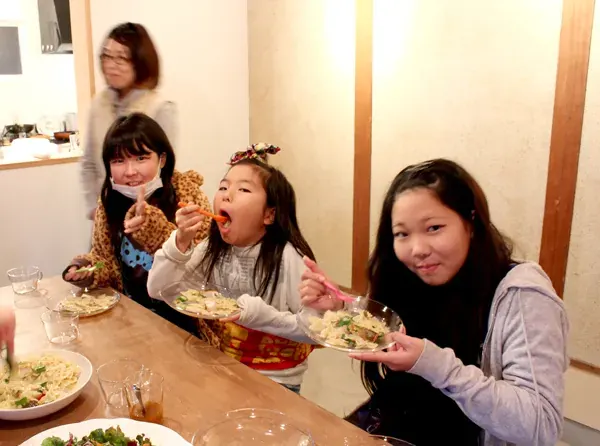
The first session in late September began with observing soil. The children gathered soil from parks and from the farm and compared the differences between places. In November, there was a session where they mixed natto bacteria, yeast, lactic acid bacteria and sugar to make a "magic spray" for vegetables. The theme of the sixth session in December was spices. They learned the difference between whole and powdered spices, blended their favorite aromas, ground them in a mill, and finished them as curry spice and dressing.
Unlike reading it in a textbook, they learn by touching, smelling and tasting. This is a way of learning that is possible precisely because the field and the kitchen sit side by side.
A final session to welcome the community
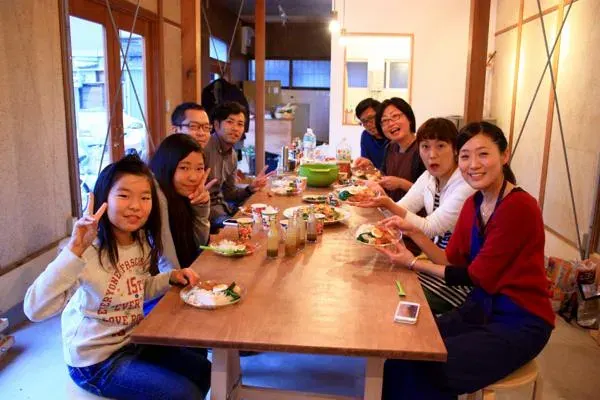
The final session on December 25 was a collaboration with To Rise Meet, an after-school day service active in Kitakagaya. The children split into three teams, decoration, presents and cooking. They decorated Parabolic Farm, the farm's symbol, as a tree, and made presents and a meal to welcome people from the neighborhood.
Grow, make, share and eat. Within that cycle, the children changed from those who learn to those who host. I believe food education is one of the roles a farm with a field and a kitchen does best.